


TunnelTalk reporting
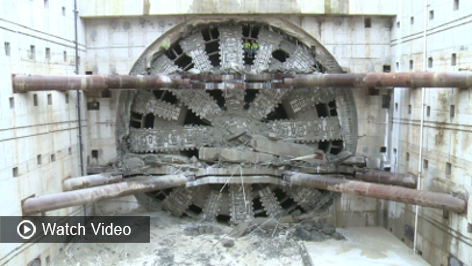
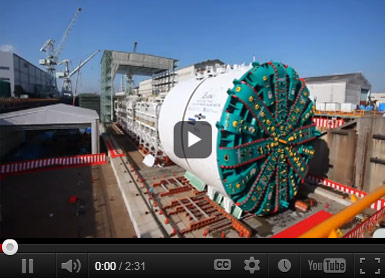
- A 15m mega slurry TBM manufactured by CRCHI of China is the latest news reported on TunnelTalk about the mega TBMs of the world and their projects.
-

15.01m diameter CRCHI slurry TBM ready for the Qiantang River underpass in Hangzhou
- The CRCHI slurry machine is to excavate one of the twin tubes of the Genshan East Road highway crossing under the Qiantang River in the city of Hangzhou near Shanghai in China. The 15m diameter mega CRCHI TBM has an installed power of about 9,755kW, a rated torque of 42,784 Nm, and the maximum excavation speed of 50mm/min.
- The machine has been designed by the CRCHI to have soft soil cutterhead to feature cutter changes in free air, frequency conversion motors for the main drive, and a retractable cutterhead.
- It also has automatic back pressurization of the rubber lips seals of the cutterhead main drive main bearing to balance the pressure on the rubber lip seals with the slurry pressure in the excavation chamber. This will protect the rubber lip seals from over-pressurised damage and maintain pressure in the excavation chamber to avoid face collapse. There are also two erectors operating on the same traveler to simultaneously erect the 10 segments in each ring of segmental lining and install the precast box service culvert in the invert and under the road deck.
- A second TBM supplied by a different TBM manufacturer will supply the second mega TBM to the project for the parallel three-lane road tunnel.
-

Qiantang River TBM has a double erector for the simultaneous installation of the segment rings and the invert culvert box
- There is news also of new mega TBMs needed in China for two separate highway projects in the city of Shenzhen on the border with Hong Kong. One is the Mawan twin tube undersea highway link which requires two 15m o.d. slurry TBMs one of which will be a STEC machine, and the other is the Zhenzho undersea highway crossing that also requires two 15.03m o.d. machines.
- To keep track of the application of mega TBMs of 14m diameter and more, TunnelTalk has published technical articles on several of these world-leading projects to provide a valuable record of their design, manufacture and operation (Table 1). While there are important mega machines working in different parts of the world, most now have been employed in China since the first, the 14.87m refurbished ex-Groenehart NFM TBM from the Netherlands for the Shangzhong road tunnel project in Shanghai in 2004. The first mega TBMs of more than 14m in diameter in the world were the eight machines used on the Trans-Tokyo Bay undersea crossing in 1994.
- To keep the record up to date and accurate, please let us know of any new mega TBM projects in the planning to add to the discussion about the possible limitations or potential for TBMs of super-sized dimensions.
| Table 1. TBMs of more than 14m in diameter used and currently operating or on order for projects around the world | ||||
| Start date/ Launch |
Country | Project * = TunnelTalk reference article See References below |
TBM manufacturer | Diameter |
| 2020 | China | Zhenzho undersea highway crossing, Shenzhen |
Two TBMs | 15.03m |
| 2020 | China | Mawan undersea highway crossing, Shenzhen |
2 slurry TBMs one a STEC machine |
14.9m |
| 2020 | China | Genshan East highway crossing under Qiantang River in Hangzhou* | 1 CRCHI slurry TBM | 15.01m |
| 2020 | Australia | Melbourne West Gate Highway* | 2 Herrenknecht EPBMs | 15.6m |
| 2018 | China | Nanjing MeiZiZhou Tunnel | 1 Herrenknecht Mixshield Ex-Nanjing Machine |
15.43m |
| 2018 | China | Shanghai Zhou Jia Zui Road River Crossing Motorway |
1 Herrenknecht Mixshield | 14.9m |
| 2017 | China | Suai highway tunnel, Shantou* | 1 CREG slurry TBM | 15.3m |
| 2017 | China | Shantou Su'Ai Sub-sea Tunnel East | 1 Herrenknecht Mixshield | 14.96m |
| 2017 | China | Shenzhen highway tunnel* | 1 CREG slurry TBM | 15.8m |
| 2017 | Japan | Tokyo Outer Ring Road Kan-etsu to Tomei* | 4 machines 1 Kawaski, 3 JIM |
16.1m |
| 2017 | China | Shanghai Zhuguang Road Tunnel | 1 Herrenknecht EPBM Ex Auckland Waterview TBM |
14.41m |
| 2016 | China | Shanghai Yanjiang A30 Motorway | 2 Herrenknecht Mixshields Ex Shanghai Changjiang under river project |
15.43m |
| 2016 | China | Shanghai Bei Heng Motorway | 1 Herrenknecht Mixshield | 15.53m |
| 2016 | China | Zhuhai Hengqin Tunnel | 1 Herrenknecht Mixshield Ex Shanghai Hongmei Road Tunnel TBM |
14.90m |
| 2016 | Italy | Santa Lucia Highway Tunnel, A1 near Firenze* |
1 Herrenknecht EPBM | 15.87m |
| 2015 | Hong Kong | Lung Shan Tunnel on Liantang Highway Project* |
1 NFM TBM | 14.1m |
| 2015 | Hong Kong | Tuen Mun - Chek Lap Kok subsea highway link* |
2 Herrenknecht Mixshields 1 x17.6m, modified later to a smaller diameter, plus 1 x 14m |
17.6m 14m |
| 2015 | China | Wuhan Metro road/metro river crossing* | 2 Herrenknecht Mixshields | 15.76m |
| 2013 | China | Shouxhiou Lake Highway Tunnel | 1 Herrenknecht Mixshield Ex-Nanjing Machine |
14.93 |
| 2013 | Italy | Caltanissetta highway tunnel, Sicily* | 1 NFM Technologies EPBM | 15.08m |
| 2011 | China | Shanghai West Changjiang Yangtze River Road Tunnel | 1 Herrenknecht Mixshield Ex-Shanghai Changjiang highway Project |
15.43m |
| 2013 | New Zealand | Waterview highway connection, Auckland* | 1 Herrenknecht EPBM | 14.41m |
| 2011 | USA | Alaskan Way highway replacement tunnel* | 1 Hitachi Zosen EPBM | 17.48m |
| 2011 | China | Weisan Road Tunnel, Nanjing* | 2 IHI/Mitsubishi/CCCC slurry TBMs | 14.93m |
| 2012 | China | Shanghai Hongmei Road | 1 Herrenknecht Mixshield | 14.93m |
| 2011 | Italy | A1 Sparvo highway tunnel* | 1 Herrenknecht EPBM | 15.55m |
| 2010 | Spain | Seville SE-40 Highway Tunnels* | 2 NFM Technologies EPBMs | 14.00m |
| 2010 | China | Hangzhou Qianjiang Under River Tunnel | 1 Herrenknecht Mixshield Ex-Shanghai Changjiang highway tunnel Project | 15.43m |
| 2009 | China | Yingbinsan Road Tunnel, Shanghai | 1 Mitsubishi EPBM Ex-Bund Tunnel machine | 14.27m |
| 2008 | China | Nanjing Yangtze River Tunnel* | 2 Herrenknecht Mixshields | 14.93m |
| 2007 | China | Bund Tunnel, Shanghai | 1 Mitsubishi EPBM | 14.27m |
| 2006 | China | Jungong Road Subaqueous Tunnel, Shanghai | 1 NFM slurry shield Ex-Groenehart machine | 14.87m |
| 2006 | China | Shanghai Changjiang under river highway tunnel | 2 Herrenknecht Mixshields | 15.43m |
| 2006 | Canada | Niagara Water Diversion Tunnel* | 1 Robbins hard rock gripper TBM Rebuilt Manapouri tailrace tunnel machine |
14.4m |
| 2005 | Spain | Madrid Calle 30 Highway Tunnels | 2 machines 1 Herrenknecht, 1 Mitsubishi |
15.2m 15.0m |
| 2004 | Russia | Moscow Silberwald Highway Tunnel | 1 Herrenknecht Mixshield Ex-Elbe project machine |
14.2m |
| 2004 | China | Shangzhong Road Subacqueous Tunnel, Shanghai | 1 NFM Technologies Ex-Groenehart machine |
14.87m |
| 2004 | Japan | Tokyo Metro | 1 IHI EPBM | 14.18m |
| 2001 | Russia | Moscow Lefortovo Highway Tunnel* | 1 Herrenknecht Mixshield Ex-Elbe project machine |
14.2m |
| 2000 | The Netherlands | Groenehart double-track rail tunnel | 1 NFM Technologies | 14.87m |
| 1997 | Germany | Hamburg 4th Elbe River Highway Tunnel* | 1 Herrenknecht Mixshield | 14.2m |
| 1994 | Japan | Trans Tokyo Bay Highway Tunnel* | 8 machines 3 Kawasaki, 3 Mitsubishi, 1 Hitachi, 1 IHI |
14.14m |
- * TunnelTalk reference below.
-
Mega slurry TBM ready for Qiantang River crossing - TunnelTalk, September 2020
Mega TBM arrives in Melbourne - TunnelTalk, March 2019
Mega TBM success at Caltanissetta in Sicily - TunnelTalk, November 2017
Mega slurry TBM for Shenzhen highway link - TunnelTalk, September 2017
TBM u-turn and relaunch in Hong Kong - TunnelTalk, August 2017
Two mega-TBMs for Melbourne highway tunnel - TunnelTalk, April 2017
Single bore solution for LA freeway missing link - TunnelTalk, May 2017
Mega TBMs begin Tokyo ring road drives - TunnelTalk, May 2017
China's mega Hong Kong-Zhuhai-Macao sea link moves forward - TunnelTalk, June 2011
Bosphorus Eurasia highway TBM breaks through - TunnelTalk, August 2015
Mega-EPBM for Italian highway tunnel - TunnelTalk, September 2016
Sparvo mega-TBM system available for new project - TunnelTalk, September 2014
Hong Kong awards major undersea highway - TunnelTalk, September 2013
Mega-TBMs for China double-deck link - TunnelTalk, May 2014
Video: Addressing Bertha's bearing seal issues in Seattle - TunnelCast, February 2014
'Yes' to bored tunnel alternative in Seattle - TunnelTalk, August 2011
Mega-TBM order is NFM's biggest ever - TunnelTalk, January 2013
Technical parameters of Seattle's mega EPBM - TunnelTalk, Dec 2012
Mega-EPBM naming ceremony at Hitachi Zosen - TunnelCast, December 2012
New Zealand joins the mega-TBM tunnelling set - TunnelTalk, August 2011
Russia confirms order for largest TBM ever - TunnelTalk, Aug 2011
A second mega-TBM river crossing for Nanjing - TunnelTalk, Aug 2011
Robbins TBM rolls into hard rock history - TunnelTalk, May 2011
Nanjing Highway Tunnels - TunnelTalk, Sept 2009
Seville SE-40 Highway Tunnels - TunnelTalk, April 2010
Giant TBM accepted and heading for Italy - TunnelTalk, Dec 2010
Seattle Alaskan Way bored highway tunnel - TunnelTalk, Oct 2009
Speedy mega TBM for Moscow Lefortovo highway - TunnelTalk, Oct 2002
4th Elbe tube inspires cutting edge technology - TunnelTalk, Jan 2000
Tokyo Bay highway engages eight mega TBMs - TunnelTalk, August 1994
UK contributor, name withheld by request
It is hard to say when the era of the mega-machine started. There was a time when 10m in diameter was considered the largest likely, or indeed possible. But whatever was once considered the technological limit for the size of TBMs, there are now many dozens of machines exceeding the 10m diameter size. This, of course, increases the benchmark for current mega-machine criteria. The need for ever-larger diameters is driven by the demand for ever-larger diameter tunnels able to incorporate extra and wider traffic lanes for heavy freight trucks as well as cars. Larger diameter bores are also needed to accommodate the latest in multi-modal transportation tunnels which will house both road and rail services as well as pedestrian and cycle-ways and perhaps also utility corridors.
Discussions in the past have considered the manufacture of the main bearing a limiting factor but these can now be designed and delivered in sections. Precision machining and welding has these vital components of the new mega-machines completed and built into them on site. A limit to the size and load of a single component to job sites was also considered a controlling barrier but first time on-site assembly, as promoted by Robbins in particular, overcomes some of these limitations.
Another consideration, as explained by Yasunori Kondo San at Kawasaki in Japan, is application of the thrust needed to advance such mega machines. For soft ground TBMs this force is applied directly to the precast concrete segments of the tunnel lining. These, as well as the number and size of the thrust rams around the perimeter of the machines, must be designed to take and deliver the powerful forces needed to move a mega-machine forward. There is a controlling factor on the number and power of the thrust rams needed to apply the force, as well as the surface area and ability of the precast concrete lining segments to accept the load.
Other considerations will be explored and added to the Discussion Forum as they are contributed.
|
|
|
|
|
Add your comment
- Thank you for taking the time to share your thoughts and comments. You share in the wider tunnelling community, so please keep your comments smart and civil. Don't attack other readers personally, and keep your language professional.
